

Your Title Is Not Your Ceiling
What Brunelleschi knew about belief that most leaders never learn

Most people don’t realize that a title can actually be a limiting belief in disguise.
For a person. For a team. For an entire organization.
This is what we do. This is what we’re known for. This is who we are.
And when a collective agrees on those beliefs, really agrees, deeply agrees, nobody questions them anymore. They stop being beliefs. They start feeling like facts.
They’re not facts. They’re just old bricks laid in the standard way.
I heard a story about this when I was recently in Florence that blew my mind.
For nearly 125 years, the Santa Maria del Fiore in Florence sat unfinished with a massive, gaping hole where the dome was supposed to be. The dream was to build the largest dome in the world. Except no one knew how to do it. The leaders of Florence trusted that God would provide the person, the answer. They waited. And waited. Still, no one knew how to do it. Because it was considered impossible.
The standard construction method wouldn’t work because the dome was too wide. The bricks would collapse under their own weight before the structure could hold itself. For over a century, the greatest architects and engineers in the world looked at that open ceiling and had nothing.
Then Filippo Brunelleschi walked in.
Brunelleschi was a goldsmith and a sculptor. He’d never built a building in his life, much less the world’s largest cathedral dome. By every conventional measure, he was not qualified. He didn’t have the title, credentials, experience, or track record.
And yet he stood in front of the commission and said: I know how to do this. I am the one.
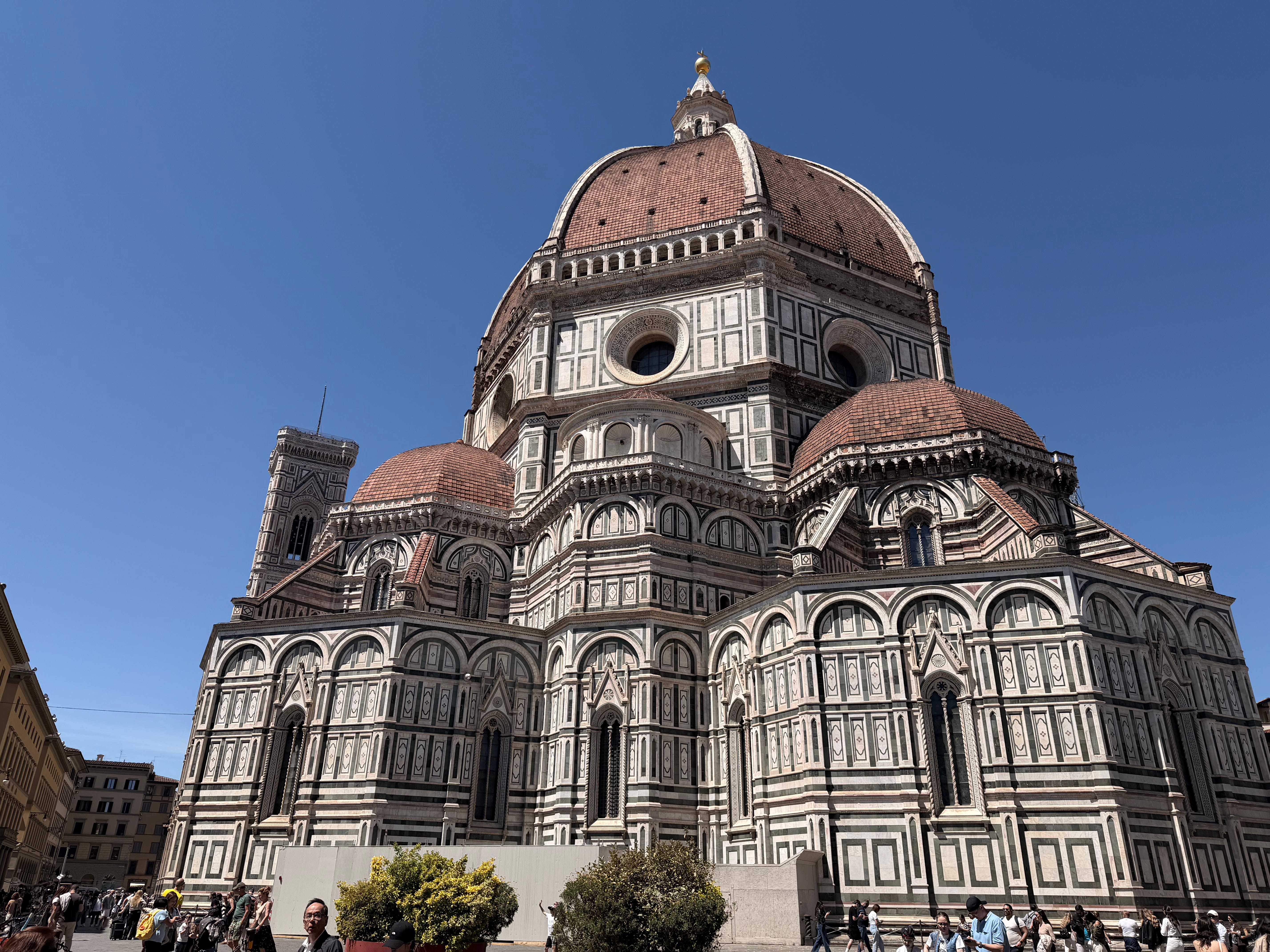
Did he know for certain it would work? No, he didn’t. But he believed he was the only one who had the method that would work.
He didn’t let his title define his ceiling.
He didn’t inherit the city’s collective belief that it was impossible. He didn’t let what others said about what was possible, or about him, become the story he told himself. He held a picture of the finished dome. Somewhere inside of him, he also held a picture of who he believed himself to be with this challenge, which was larger than his qualifications, larger than over 100 years of experts who had already failed, larger than the consensus of an entire city.
He just knew. And he believed.
The answer, when he finally found it, was almost impossibly elegant. Herringbone brickwork. Instead of laying bricks in the standard way, which would cause the weight to collapse inward, he laid them at an angle. The herringbone pattern redirected the weight circularly. The dome held itself up.
Genius. Absolute genius.
For centuries after it was built, no one could fully explain how he did it. He even falsified sections of the masonry on the surface so that anyone who tried to replicate his method would fail. It took researchers until 1983 to begin unlocking how he actually pulled it off.
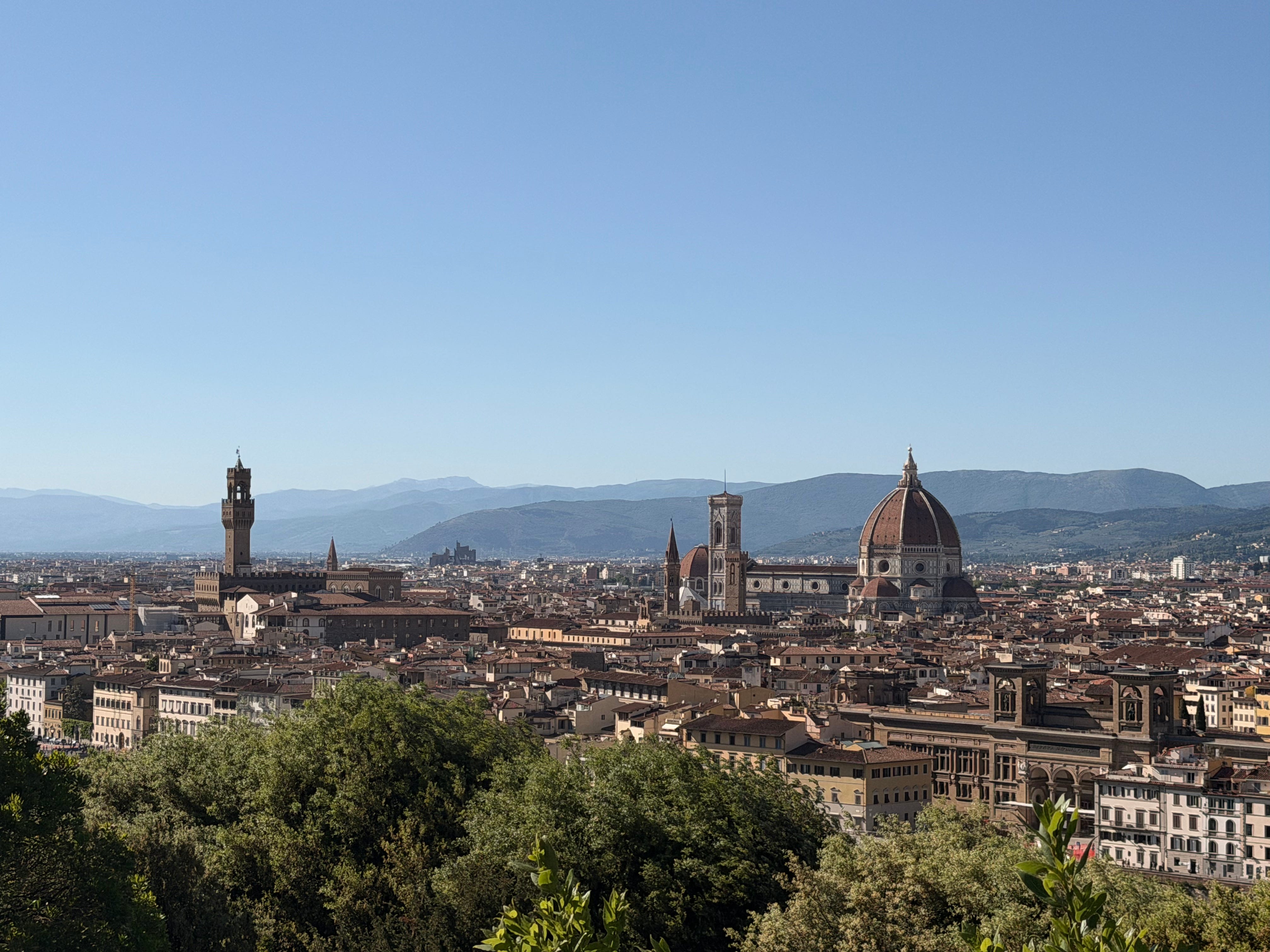
I peeked out the tiny window on the top floor of our 15th-century Airbnb and saw the dome from a distance, breathless with its beauty, before I knew the full story. Then I learned it, and my awe became a question I kept turning over in my head.
How did someone have that level of confidence without the experience? Without even being an architect?
I think I know. He didn’t believe in his title and background as a limitation.
I think about how many people are standing in front of their own impossible ceiling right now. And how many organizations are too. Career changes. Job losses. Industries are shifting overnight. AI is rewriting the rules of entire professions. And underneath all of it, for individuals and for companies, there’s a voice. Often from a long time ago. Telling you who you are, what you’re qualified for, what’s realistic for someone like you. For a team like yours. For a company like ours.
We’ve always done it this way.
That’s not what we’re known for.
We tried that before.
That’s not realistic for an organization our size.
Those are old messages. Old bricks laid in the standard way. And the standard way, as Brunelleschi knew, will cause the whole thing to collapse inward.
But what if you didn’t believe them?
What if the most dangerous thing in your organization right now isn’t the market, or the competition, or the technology, but the collective agreement about who you are and what’s possible?
What if your abilities, yours personally, your team’s collectively, were never the problem?
What type of thinking would emerge if you fully, completely believed in what you could build?
What would you attempt if you stopped letting your title, or your organization’s identity, be your ceiling?
After 14 years of working with people and leaders in the hardest moments of their lives and careers, here’s what I know: the story you tell about yourself feeds who you believe yourself to be.
The standard way might be collapsing around you. The framework everyone told you to use might not hold. And you might be standing there, individually or collectively, not quite qualified by anyone else’s measure, looking at an impossible ceiling.
But the same creative energy that moved through Brunelleschi moves through you. Through your team. Through every person in your organization who has stopped believing the collective story about what’s possible. It’s what makes us human. It’s not something AI can touch.
The question is whether you’ll let yourself, or your organization, be the one that figures out the herringbone.
Who do you believe yourself to be?
And who does your organization believe itself to be?
Asking these questions is important, but not enough.
If you deeply explore those questions and shift into who you want to be, and who you want your organization to be, answering them might be the most important work you do this year.
For your audacity,
Sarah
P.S. If this piece landed somewhere in you, hit reply and tell me. I read every note. And if you're ready to go deeper, I created A Return to Self, seven modules of deep identity work built for the person who is ready to stop living as who they've been told they are, and start living and leading from alignment and confidence.
Your pace. Your terms. Lifetime access. $297 →